

Finding yourself arguing against investing in social media? This is for you.
This isn’t just another newsletter about why social media is important. I think we can all agree on that. But here’s the thing: Democrats still aren’t doing it well, broadly speaking. We, as a Party, understand it’s important, but now we need to help candidates do it, and do it well. I want to make the argument that EVERY campaign should be investing in their organic social media presence, making it a part of the standard paid communications mix for winning campaigns.

We are on the heels of huge wins for Democrats across the country earlier this month, and we saw organic social media play a major role in candidates’ ability to talk to, motivate, and organize voters. We all know the name that immediately comes to mind: Zohran Mamdani of course! But if we also look at the other major wins at the top of the ballot, Abigail Spanberger and Mikie Sherrill, we see that all three utilized social media in their own unique ways to talk to voters effectively and consistently. They all made the investment. Why? Because Millennials and Gen Z live online, and they have become critical electoral voter blocs. These three campaigns understood that to move voters, they need to talk to them on the platforms where they get their information.
Zohran Mamdani used organic social media exactly as he should: as a grassroots campaign communication and organization tool. This newsletter dives into why a social media presence is critical, how important it is that Democratic candidates fill the dead zones, and the argument you need to make to get your candidates on board with investing in organic social in a meaningful way.
Why It’s Important
Organic social media is not just about posting content. It is about reaching, persuading, and mobilizing voters where they actually spend their time. Millennials now make up the largest voting bloc in America, and they are just as likely to spend time on Social Media as they are watching television. Meanwhile, a whopping 46% of voters aged 18-29 get their news primarily from social media, according to Politico.
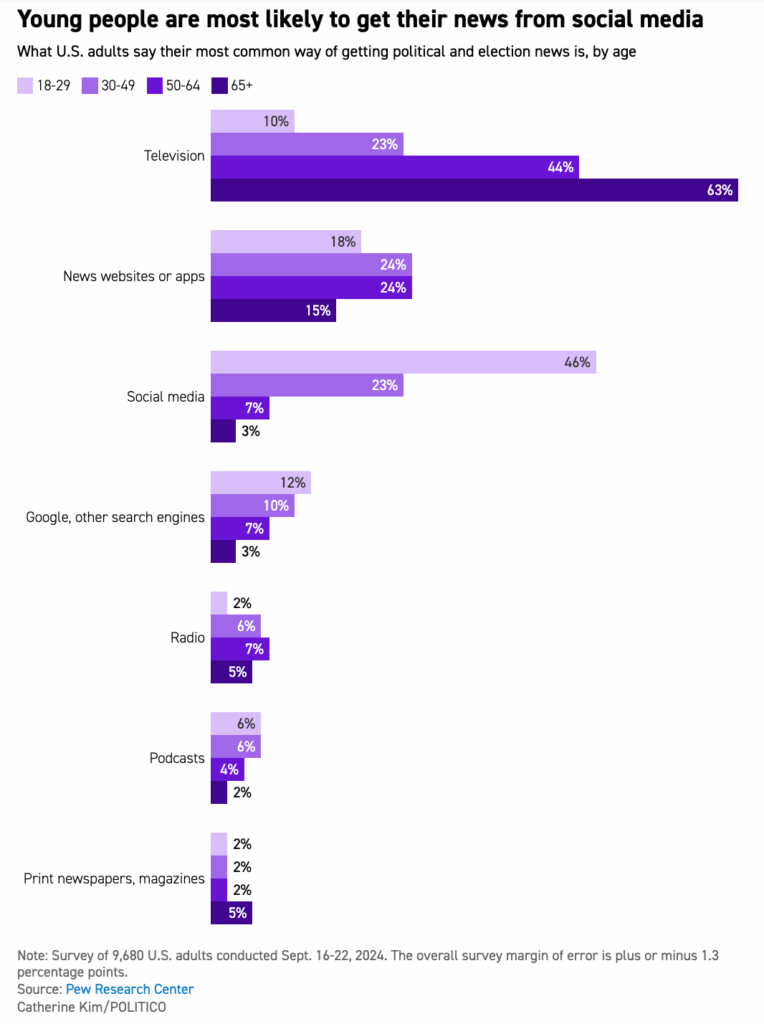
This graphic shows that traditional campaign communication methods – Television, Radio, Print Media – fail on their own as communication methods for reaching voters aged 18-49. Social media is a critical piece of the pie.
Utilizing organic social media also allows campaigns to reach a wider audience and extend messaging far beyond the existing supporters. It ensures that you are talking to new audiences every day. Generally, Millennials and Gen Z don’t start their day by watching the news on cable or checking CNN.com. They get their news and form opinions on platforms like TikTok, Instagram, and YouTube. When Democrats are not present, the right fills that space and defines the narrative:

The right has dominated the online space for years, shaping opinions and influencing younger voters in real time. If we look back at the 2024 election, we saw men aged 18-21 voting for Trump in shocking numbers. But if we consider that those people are within the EXACT audience being targeted by online right voices (and getting their information from social media almost exclusively), it starts to make a lot of sense (in combination with many other factors such as young men feeling marginalized, which right wing voices online helped validate). Meanwhile, Democratic-leaning and undecided young voters are eager for authentic, resonant content. But it’s nowhere to be found. When Democrats do not show up, that hunger is met by the opposition. We lose young voters.
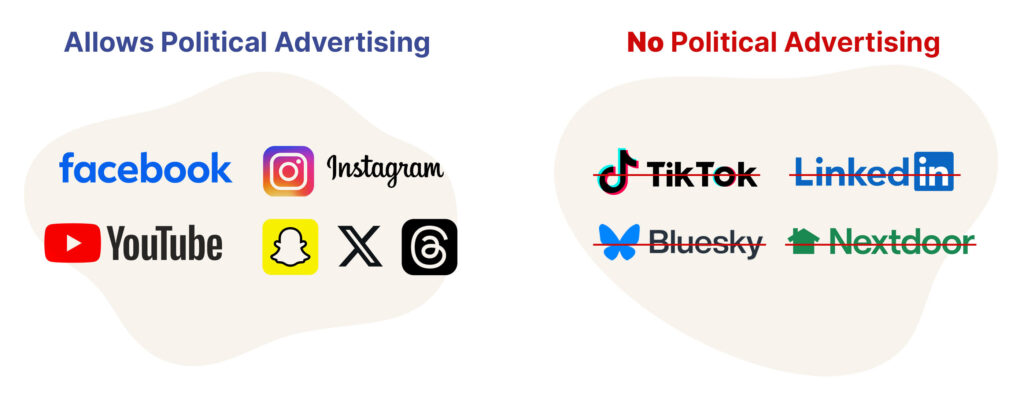
You may be thinking, “we can just run ads on these social platforms to reach voters and help make up the gap.” That’s true for many social platforms. Paid social campaigns are an important part of modern media mix. But we as a Party must understand that there are huge political advertising dead zones across the social landscape. Platforms such as TikTok, Nextdoor, LinkedIn, and BlueSky do not allow political advertising, meaning organic efforts are the only way to talk to voters on those platforms.
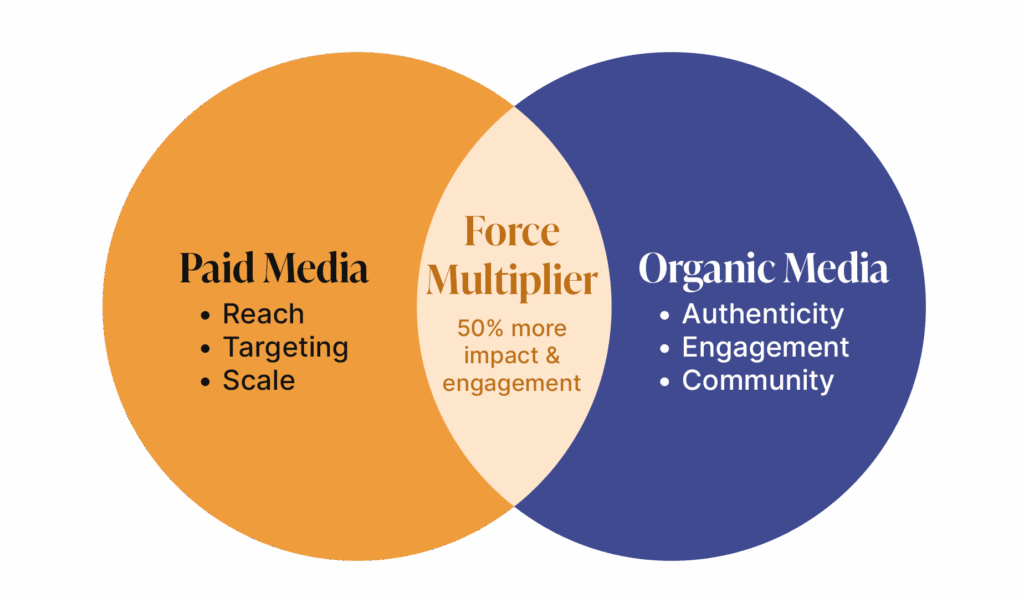
Just as importantly, a campaign that prioritizes paid social without also investing in organic social misses the reality that organic is THE modern grassroots tool. It builds community, shares messages, and mobilizes action at scale. Politicians need to learn how to be influencers online – in the style that works for them of course. Today’s voters follow people, not ads, and candidates who become trusted voices online see their paid communication perform better. Our research shows engagement is about 50% higher on paid ad campaigns when we are also running professional organic social media programs for our clients. Paid and organic efforts should work in tandem, helping build trust through social media, while amplifying, persuading, and turning out voters through ads.
Finally, visibility signals strength. Donors, reporters, and power players all look to online presence as a measure of a campaign’s seriousness. If you are not visible, your opponent will define you instead.
It’s Time for Democrats to Fill the Space
Republicans have owned the online conversation for too long. They dominate organic social, podcasts, and YouTube, meeting young voters where they already are and shaping how they think about politics. We saw this in 2024 with the right-wing podcast parade through Election season. It might have irked some people, but it worked.
Millions of young, persuadable voters are waiting for credible Democratic voices. They want engaging, authentic content that feels current and real. We have seen how effective this can be through leaders like Gavin Newsom, who make politics feel accessible and compelling. Especially among younger men, what they see online plays a major role in shaping how they vote. If Democrats do not fill the dead zones, the right will continue to define the conversation for us. Democrats cannot wait another year to figure this out, if we want to win elections we need to adapt and get online.
The Argument for Investing in Social Media
It is time to rethink how campaign resources are invested. Instead of buying the final 100 Broadcast Gross Rating Points to hit the Broadcast media audience a final time (learn more about the impact of Gross Rating Points with COMPETE’s Media Buying Tool), campaigns should redirect a small portion of that spend to building a consistent organic presence. We understand that the early investment it takes to run an effective organic social program can be challenging from a resource perspective, and that quantifying social’s ROI is difficult. We have to help decision makers get past these objections, as social has proven it’s a communication lane that cannot be ignored or underfunded.
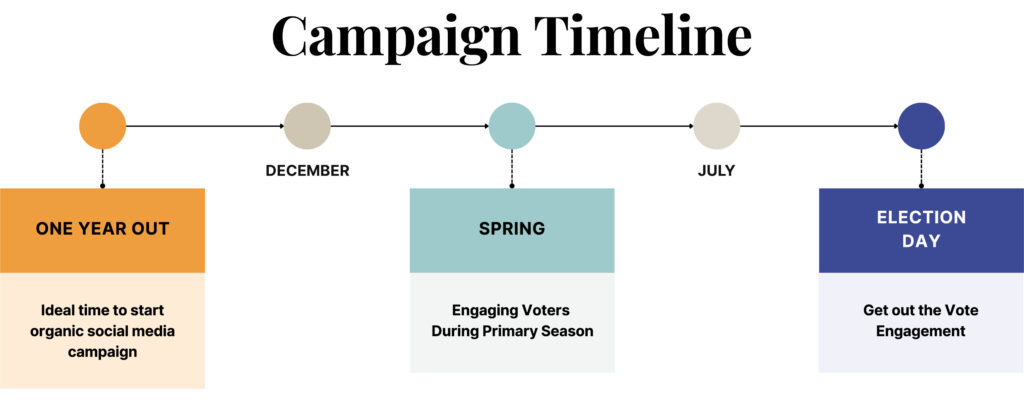
Our recommendation is simple: if you’re in a competitive election, take two to five percent of your paid communications budget and invest it in organic social management. We recommend starting to build your presence at least a year out from your election, or at the outset of your launch, if budget allows. Starting early ensures your campaign owns its story before your opponent does. Republicans are already filling the space, so waiting means you begin behind. Start early, hire experts, and control your narrative. Voters decide who feels authentic and trustworthy based on what they see online. Do not let silence make that decision for them. Whether your candidate has the ability to go viral or not, having a strong and consistent social media presence should be viewed as just as essential as having a website. You need to be present and active when voters go to find you on whatever platform they use.
Case Studies from 2024
Trump and Vance dominated the podcast and YouTube ecosystems, connecting directly with young male voters. AOC, Mamdani, and other progressive leaders showed how consistent, authentic social content can reach across audiences and drive real voter turnout.
Another example: in 2024 exit polls showed that people in AOC’s district were voting for both AOC and Trump. Mystified, AOC and her team conducted a study to figure out what people saw in common with them and one of the most notable responses was, “I feel like you and Trump are both real.” AOC and Trump (in their own *unique* ways) have pulled back the curtain and let voters see a side of politics they don’t usually get to see. And the main conduit for this? Social media. We KNOW many voters don’t feel fondly towards politicians, especially the archetype we have seen for decades elected to office. This is an example of social media being used to talk to and influence voters in a way they can connect to, and it’s critical for future candidate success.
A strong social presence signals strength to donors and the press. Campaigns that invest in both organic and paid efforts demonstrate energy, seriousness, and momentum.
Making It Easy
This is our case for making organic social a standard part of every winning media mix! Do not get stuck fighting yesterday’s battles. The future of persuasion and mobilization is online.
At COMPETE, we recognized this shift early. We are proud to be one of the only Democratic firms with an in-house organic social media department dedicated to amplifying Democratic voices, filling the dead zones, and ensuring your campaign wins where it matters most: online.
If you agree completely, if you are hesitant, or even if you are a staunch social media hater (look, I get it), reach out! We need to continue talking about this to ensure Democrats win in 2026 and beyond.
Isobel Sylvian
Partner, Director of Campaigns
Isobel@CompeteEverywhere.com